
By Quirien Lemey, Senior Fund Manager Global Equities at DECALIA
For the past two years, global equity markets have been largely driven by a handful of large-cap technology stocks. This concentration has been fuelled by the rise of artificial intelligence, but it now raises a key question for investors: where will the next drivers of growth be found?
Innovation is not confined to a few mega-cap companies or to a single technology. It is gradually transforming many sectors of the economy, from digital infrastructure to healthcare, as well as electrification, connectivity, automation and energy resilience.
At this stage of the cycle, massive investments by the large hyperscalers continue to support demand for technology infrastructure. But this infrastructure is no longer limited to semiconductors alone. It now encompasses a much broader ecosystem: electronic components, optical networks, high-voltage electrical architectures, cooling systems, energy equipment and solutions that support the scaling-up of data centres.
This dynamic is opening up a field of opportunities beyond the most visible mega-cap names. Many mid-sized companies, often less closely followed by investors, play an essential role in this value chain. They do not necessarily make market headlines, but they provide the indispensable building blocks for the deployment of innovation.
This is also true in healthcare. After several years marked by post-Covid normalisation, tighter financial conditions and regulatory uncertainty, some valuations now appear more reasonable. At the same time, innovation continues to transform medical research, diagnostics, clinical trials and the personalisation of treatments.
Software is another area to watch. The market remains cautious about the disruption risks linked to artificial intelligence, but some companies, particularly in cybersecurity and infrastructure software, could benefit from the gradual transformation of companies’ operating models.
Finally, solutions linked to ecology and renewable energy are also undergoing a structural shift. The theme no longer rests solely on support from environmental policies. It is now part of a broader dynamic driven by energy independence, the electrification of economies and infrastructure resilience. In a context in which energy security has once again become strategic, these investments retain long-term relevance.
Building a global exposure to innovation
The challenge, therefore, is not to seek exposure to a single theme, however powerful it may be. Rather, it is to identify, on a global basis, the companies capable of benefiting sustainably from the major transformations of the economy.
This approach requires looking beyond the most concentrated indices and the most obvious stocks. The next sources of value creation could come from a much broader ecosystem: technology infrastructure, healthcare, software, food, automation, electrification, energy and industrial resilience.
This evolution will not be without volatility. Interest rates, the investment decisions of major technology players, geopolitical tensions and public policies will continue to influence the pace of the cycle.
But for long-term investors, the central question remains the same: how can one build a balanced global equity exposure to innovation without depending excessively on the handful of large companies that drove the first phase of the trend?
While the past few years have been dominated by a handful of emblematic leaders, the next phase could benefit a wider universe of innovative companies, often more discreet but essential to the transformation of the global economy.
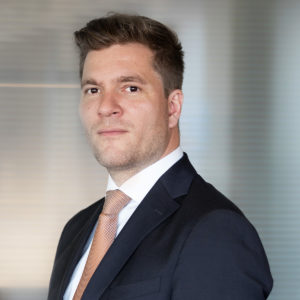
Quirien Lemey, CFA
Senior Lead Portfolio Manager of DECALIA’s strategy focused on innovative sectors and disruptive companies
Quirien Lemey worked for 11 years at Degroof Petercam Asset Management, first as a global technology analyst and then as portfolio manager of several multi-thematic and sustainable funds. Prior to that, he spent two years at Accenture as a financial analyst. Quirien Lemey holds a Master’s degree in Economics, an Advanced Master’s degree in Financial Economics, and is a CFA charterholder.